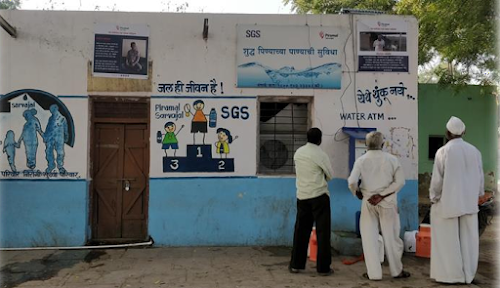
Showing posts with label Remote Monitoring. Show all posts

Wednesday, 23 June 2021

Kharsan, Rajasthan Adopted by Standard Chartered Bank


Kharsan village in Bhinder,Udaipur,Rajasthan has a population of 2905 people with about 655 households. The people live a simple life and earn their living by farming and other family businesses. Village literacy rate is 66.3% and people have a monthly income ranging from 5000 to 15000.

Our team conducted baseline survey to dipstick the awareness and perception of drinking water and related habits. People based ‘taste’ of water as a parameter for quality of water. They had salt deposits on their utensils, they felt TDS and acidic contamination was a major impurity in their water. They were dependent on groundwater with average TDS of 2100ppm as source of drinking water so joint pains and discoloration of teeth were highly common. Some of them used had domestic RO or purchased from private vendors at Rs 15/- for 20 litres. 97% (31/32 households) of the people expressed dissatisfaction over quality of water and need for safe drinking water. 

Partnership: 

Standard Chartered Bank under their CSR initiative adopted 17 villages across 7 states in India to provide access to safe drinking water to these villages. One such village is Kharsan, Rajasthan where in 2017 a 500lph machine with water ATM was installed to serve safe drinking water to the villagers. 

How to become a Sarvajal Customer:

A customer has to get a RFID card from our Sarvajal Kendra then recharge with the operator for ongoing use. Our team made 254 members card and till date 599801.3 liters of water has been dispensed. 

How to use the RFID card:

Step 1: Place the card on the screen of the ATM. 
Step 2: The balance of the card and TDS of the water is displayed.
Step 3: He chooses to withdraw water as per his wishes as our ATM allow flexible dispensing and pays only for water taken by him. 

Changes after the intervention:

A midline survey was done in 2018 showed that

44% of the population has been fetching water from more than a year. 
Among 16 households, 56% of them shared that they have experienced reduced in medical                     expenses 
69% of households have lesser number of water borne diseases. 
Drinking water from Sarvajal Kendra was also a matter of pride for the consumers that have been         surveyed. 
They acknowledged the importance of the water quality as it is beneficial to them. 

The Operator’s Voice:

“There are more than 253 cards; I consider this as Sewa ; Agar kisi bhi vajah se atm is pani nahi milta hai toh mein Seva ke taur pe aise hi pani de dete hu, log 800meter door se bhi aate hai paani lene toh unko aese khaali nahi jaane dete” – Operator Radhe Shyam

                                                                                                                                                                      
“As the sarvajal Kendra closeby my house I go and fetch water at any time in a day. Three years back a team came from Delhi to conduct research on water, later the reports came and the percentage of acid and fluoride was high. After knowing this, my family decided to take water through RO tankers from Kheroda Village (near to Kharsan) for 15 lts for 20 Rs. Now, ever since Sarvajal Kendra is in our village, it’s easy to go and take water. I have relief from joint pain and acidity”
 –Shaanta Manariya, Home Maker.  
She has done 425 transactions of 4198.1 Litres till date (Data from SEMS; Sarvajal Enterprise Management System).
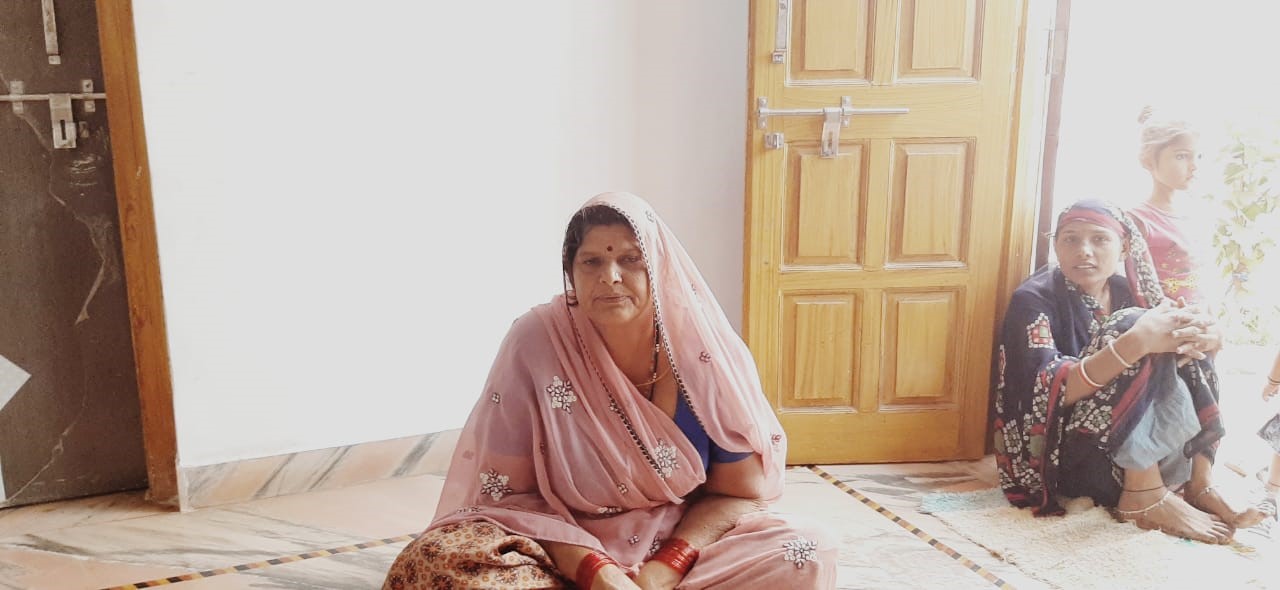
“We take Sarvajal Water even though we have a borewell at home as it tastes good” –Rekha ji  ( 169 transactions of 2071.9 Liters till date)

“We get water from the Sarvajal plant as most of us find domestic RO very expensive”– Vipul Manera (636 transactions of 7397.3 Liters till date)

“When we got to know from the people that the quality of water is good, it motivated us to take water from Sarvajal plant.We take water everyday and have seen health improvements in my family” – Shyam Lal (617 transactions of 8792.5 Litres till date)


“We use filtered water from panchayat(Sarvajal) machine for our drinking purpose only. I realized that my constant painful joints have relived after continuous use of Sarvajal.However we use borewell water for cooking as the water gets boiled while cooking the food; Khana banate waqt ubal jaata hai toh usme hi kaam le lete hai, Kitaanu bhi hat jaate hai”- Suresh’s wife (342 transactions of 4756.4 Liters till date)

”We trust our Operator; he is the one who is serving every one of us. Some of us cannot afford domestic RO so use of this service at an affordable price is the best thing about your service.” - Ishwar Lal and Nana Lal

SEMS data showing a monthly pattern of liter dispensed on a daily basis


Our internal impact assessments have showed: 

Marked difference in the behaviors of the people towards drinking water.
Our community engagement activities of safe drinking water facilities have created awareness                amongst the people.
They appreciate the price at which it is made available to everyone. 
The card recharge is extremely easy and found facility clean and hygienic managed by a friendly             operator.

This intervention is changing the health of the community as 44% people moved to safe drinking water practices from more than a year because of health benefits and overall improvement in their quality of life. Water is precious and the people of this village are sensitive to it. There is awareness on water conversation as 2 houses had rain water being harvested in a structured way.


Friday, 4 June 2021

Story by: Barnini Chatterjee (Volunteer) 
Location- Dwarka Sector-3 adopted by Delhi Jal Board

Providing safe, accessible and affordable water to the underserved communities has always been Piramal Sarvajal’s mission. With increasing cases of COVID-19 across the country, we have seen prolonged lockdown and disrupted services everywhere. There has been a constant fear about everything related to jobs and making basic needs meet especially for the community living in Dwarka Sector 3. 

Fortunately, Sarvajal has been able to continue to support the locals here by providing uninterrupted service even in these uncertain times. We caught up with 3 users while they were at the plant to get water, and they shared their experience with us. 

Consumer Md. Shakeel filling up a can to take back home

Md. Shakeel has been a user of Sarvajal for the past year and is quite satisfied with the service. A family of 4, currently living on rent in the area; strongly feel that because of using Sarvajal, there has been no major sickness or any water-borne diseases. The family consumes about 500-600 litres monthly, and feel it is highly affordable and safe.  Shakeel quotes ‘’yeh meetha paani, tanker jaisa nahin hai. COVID-19 ke dauran swacch paani milna mushkil nahin hua- Sarvajal se kabhi bhi koi bhi card se paani le saakte hai’’. He also adds that the community has largely benefitted since there are no long queues and everyone can get water as per their requirement.

Consumer Om Prakash sharing his experience while taking water
Another resident Om Prakash, who has been using Sarvajal for 2 years, echoes the same sentiment. The convenience of the recharge system makes it easy and hassle-free to get drinking water for his family. Consuming around 1000 litres, the 5 member family, are being extra cautious due to the COVID-19 outbreak, and are strictly following good hygiene practices. He added, ‘’Mohalle mein kisiko koi pareshaani nahin hai, kyounki hum sabko swach aur surakshit paani mil raha hai.’’


Vijay Kumar seen collecting water in empty cans

Vijay Kumar who lives with 6 of his family members in A Block shares “Hum pichle 3 saal se hi Sarvajal ka paani istemaal kar rahe hai. Paani ekdum filter RO jaisa hai, saaf aur meetha; koi ghar mein bimaar bhi nahin hota’’ Vijay and his family consume 900 litres monthly and are quite satisfied with the system of the water card where there is no specific time to collect the water.

Before Sarvajal, the community had no source of regular clean water and would end up spending 250 for 1000 litres, with the exception of few NGO’s and social workers’ occasional involvements and water supply. However, the residents of Dwarka Sec 3 have unanimously agreed that the quality and taste of Sarvajal has been by far the best.

Sarvajal ensures to continue connecting with more families and hear of positive stories from them; where the communities keep getting the benefits of access to safe drinking water in these unprecedented times. 


Sunday, 26 July 2020

Delhi Jal Board – Narela Location


As the number of cases has risen in Delhi, many of the local people of Narela, Delhi have started adopting Sarvajal Solutions as shared by operator Ajay Ji. 

The location of Narela, Delhi comes under the Delhi Jal Board. In 2015, due to the prevailing situation of safe drinking water scarcity, they collaborated with Piramal Sarvajal as an implementing partner to provide safe, affordable, and accessible drinking water solutions. 

The location has a hub with 4 spokes to reach out to every area of the community. Currently, the hub has 3 wall mount structure and 1 ring structure machine to fetch water. Till date, 3863 cards have been made. 

 Regular sanitisation and social distancing at Narela 

Ajay ji mentioned, “during the lockdown, Sarvajal Kendra was open 24*7 at Narela, I and other employees were available throughout the day. For self-protection, I put up a rope near my desk to maintain social distancing. People are satisfied with the quality of water and regular services. 
We follow every health guideline to educate our consumers. I reinforce the measures by telling them many times to regularly wash hands and utensils, clean your surroundings and have clean water so that it gets ingrained in their behaviours and actions.”  

 The rope is a reminder for social distancing. 

Consumer Testimonial- Pawan Kumar, (5 members in the family)

During the lockdown when I saw the crowd at Sarvajal plant, I decided to take water from a private supplier. I switched 4 vendors but my family and I were not satisfied with the quality and hygiene. I ended up again taking water from Sarvajal. Ajay Ji suggested me to come early morning to fetch water. In these difficult times, the machine is working constantly and I really appreciate the hard work of the team who manages multiple tasks at the same time.


 Sarvajal Enterprise Management System showing the monthly pattern of daily dispense

The water off-take from March (179710 litres) to May (297714 litres) total production has shown improvement by 65% which shows how people have developed a sense of caring towards themselves and their family. After interacting with the consumers, the feeling of satisfaction and pride is indeed visible and they are happy with the services of Sarvajal. 

Friday, 10 July 2020


Kattur- Adopt a Village by Ashok Leyland
Story by: Vaishali Sharma
Sourced by: Laxmi Narayan


Now when the government has announced Unlock 2.0 in the nation, Tamil Nadu is a state where the Lockdown is still there and it’s been 3 months since the state is following the rules and regulations to protect themselves from this invisible virus.

Voice of Consumers

Mrs Thisla, Age-48,

“It’s been one and a half years since my family and I have started taking water from Sarvajal and can't imagine my life without this service.  Sarvajal water is God's gift especially during this lockdown period.” 


One of the locations Kattur in Chennai was adopted by Ashok Leyland on 22nd January 2019 to provide safe, affordable, and accessible drinking water services with the implementing partner Piramal Sarvajal

The population is largely depended on agriculture. In January they cultivated a huge amount of rice (Paddy in Tamil). When the nation lockdown was announced, the community faced challenges in doing their daily practices. 

As the community had 3 COVID positive patients as shared by our operator Vennila Ji and the consumers as well. Local panchayat announced it to be a completely restricted area and from then all are staying at home.

Sarvajal Enterprise Management System showing the monthly pattern of daily dispense

During this difficult situation, people stopped taking water from the private plant which is at Kadapppakam village, 3 km away from Kattur. When the quality and cleanliness were the priority, a total of 116 new cardholders enrolled for the services of Sarvajal. Till date, the location has 458 cardholders. The water off-take from March (97,039 litres) to May (1,31,124 litres) total production showed improvement by 36%.
Voice of Consumers 
Mrs Latha age-35,
“I got hope and became a member of Sarvajal when Vennila Ji explained the stages and process of purification. I initially used to think that a lot of chemicals is used to purify the water. I am now satisfied and taking water regularly from our clean Sarvajal plant. Now it has become a lifeline for us.”
While speaking to our consumers they shared about how they build trust with our services over a period of time. Vennila Ji has fixed the timing of her availability, 6 to 10 AM, and 4 to 9 PM and has mentioned the same outside the plant. She regularly speaks to the people and allows them to visit the plant from inside and see how it is regularly cleaned. One of the consumers talked about how Sarvajal services keep a track of their monthly expenditure on the water as compared to Kadappakam which has a coin facility.

Vennila Ji is the first women operator among all the locations of Ashok Leyland. She set an example that women can also lead and take charge of the facility installed for the benefit of all people. She is smoothly managing the plant with 9 Village water Committee members and feels happy and confident for the efforts they put in together.

“Only by giving are you able to receive more than you have.”
— Jim Rohn


Wednesday, 17 June 2020

Adopt a Village by HDFC Kheda, Madhya Pradesh
Story by Vaishali Sharma 

When the entire nation was lockdown, all our needs were going back to basics. The need of the hour was to get what was immediately available to the nearest. Hence the local market could easily suffice the need.

Similarly, think of it, if you have safe, affordable and accessible drinking facility at the nearest place then will you consider repairing your domestic RO machine when none of the servicemen is available to come to your home and do the needful. Even if it's is happening then how many of you are willing to pay a huge amount of maintenance charge during these tough situations? 

The same situation happened with many households at Kheda, Madhya Pradesh. It is one of the locations adopted by HDFC Life to provide safe drinking water facility to the villagers. These testing times, I happened to interact with our enthusiastic and young operator Vishal Patidar, Kheda location. 
He shared, “the village mainly consists of the Patidar community where the nearby households have RO water facility. Due to continuous lockdown, they were not getting any servicemen for the maintenance who could provide service at a decent rate. They were sceptical and felt unsafe to bring someone inside the house. Now it's been more than one month since many of them have switched to take water from our Sarvajal Kendra.” 

Figure 1: Sarvajal Kendra is regularly sanitised by the operator and consumers are maintaining social distancing.
It is so evident by his statements when we compare the monthly production data. And from the last month, there is a jump of 40% (Comparing March- 6501 litres and April- 9055 litres total production) which is indeed a sound response from the community. 

Figure 2: Sarvajal Enterprise Management System shows monthly data of April litre dispense
It shows that the access of domestic RO was there but people didn’t have a huge amount to pay for the maintenance. However, the villagers found Sarvajal services affordable and easily switched to our solution. Our operator follows a safety guideline, sanitising the ATM all the time, reminding people to maintain social distancing and asking villagers to wash their hands and utensils. 

He kept going "logo mai ab ek respect wali bhavna hai ki unke gaon ke hit ke liye ye suvidha hai jo aas paas nahi hai.” It’s a matter of pride for them to have Sarvajal Kendra in their village whereas in the neighbouring village such a facility is not available. 

Because of the unavailability of servicemen, the charges also increased and our operator happened to calculate and compare a one-time service charge of Domestic RO with a yearly take-home price of Sarvajal. He shared "Mai toh sabhi ko ek hi baat bolta hu ek mahine ki servicing ke liye aap 2000 rupeeye doge, yaha Sarvajal ka paani poore saal ke liye bhi 2000 rupeeye jyada hai"  From his words, I realised how important it is to make our consumers understand the financial comparison and the overall benefits of it. 

One of the consumers, Ghanshyam Verma Ji now sends his kids to take water. Their home is half a km away from the plant. He shared “the little ones are just 8-10 years old. They come with their bicycle and feel comfortable to take water from our plant" says Vishal ji. 

In the end, he said "during such health crises, I am glad people are realising on their own and have started taking safe water. Now the consumers have taken for a month and I am sure they will continue to take the same. I would be reinforcing the positive impact among my customers so that they become consistent in taking safe water

While conversing with him I also got to know that the Gram panchayat has bought another card where they provide camper facility to the people who comes from outside and are quarantined for 14 days. They were concerned about the people as the raw water TDS is more than 1000 pmm which is not safe to have. 

This shows that people are now collectively taking care of their health consciously and choosing what is right at this point of time by considering safe and affordable choices in life. 
It says, “Water is the foremost cure and good medicine as well.


Figure 3 Consumers regularly cover their mouth and wash sanitise utensils before filling safe water

Monday, 15 June 2020


Hariawan, Uttar Pardesh
Story by Vaishali Sharma 

Making a lasting change in behaviour is rarely a simple process and usually requires self-commitment towards the effort and time we give. Each specific action for a better lifestyle is one step ahead for our change in behaviour. 

Here, I am going to talk about some actions taken by the community of Hariawan, Uttar Pradesh for the betterment of their overall health and life during the global pandemic of COVID-19. The community is adopted by DSCL Sugar (DCM Shriram Consolidated Limited) and partnered with Piramal Sarvajal to provide affordable, accessible and safe drinking water.  

I happened to interact with our location Operator Gaurav Ji to know the situations and visible changes in the past two months among the community members. 

Figure 1 Consumers are regularly sanitising utensils, wearing a mask and maintaining social distancing


He shared that "the community has started taking precautions and solely taking responsibility to protect their self. Now, we don't have to look for anyone who is maintaining the precautionary measures and who is not. From social distancing to regular washing and sanitising hands and their utensils is all now ingrained among them." "Log ab apna bachaav khudh kar rahe hai. Sabme bohot badlaav aate hue dekha hai. Aur jo shruksha ke liye baate batai hai woh apne app kar rahe hai. Social distancing karna, hath dhona, bartan saaf karte rehna."

He continued, "We are blessed that our village has a mic facility which plays a major role during these difficult times. With the help of mic, we are consistently sharing that it is utmost important to regularly clean our surroundings, home and have safe water and food." "Saaf aur swach khana banaye, saaf paani ka hi sevan kare aur swayam ko bhi lagataar saaf rakhe toh bimaariyo se bachenge”

One of the customers Somendra Singh (30 years old) stays 2 km away from the plant, has made a card and now having water from our Sarvajal Kendra. The conditions have made many such individuals realise that to protect ourselves from this invisible virus it is important to have safe drinking water and keep up with a good level of immunity. 

He shared that from March, he has made 23 new RFID cards.  By listening to this, I happily replied and said that the improvement in the water off-take is increased by 84% (Comparing March- 9377 litres from April- 17179 litres of total production) 

Figure 2 Sarvajal Enterprise Management System showing total production and Avg. production per day

He continued telling "with the new cardholders I regularly take feedback regarding the taste of water and how they feel after taking it for a week." 

“While looking at their neighbours most of them have started taking water.” ("Apne aas paas ke logo ko dekhkar bhi logo ne saaf paani lena shuru kar diya hai")

Consumer Prabhat Mishra told him "Gaurav Ji Handpump ko to koi sanitize nahi karta toh kitna jyada risk waha se paani lena. Aap toh mera card banwa dijiye mai sarvajal se hi paani lunga. Ye saaf paani hai aur har waqt aap ise senitise bhi karte hai. Virus ab jaldi jaane se nahi raha tho apna bachaav kudh karke chalte hai" It is difficult to take water from the hand pump which is not sanitised and risky to take. This virus will not go easily, it is better we should all take care of ourselves. Sarvajal water facility is sanitised properly and is safe to have regularly. 

I had a very positive and engaging conversation with the operator, wished him good health before finishing the call. He reciprocated and gave me a nostalgic feeling "madam aap bhi social distancing rakhe, ghar ka khaana aur saaf paani peeye, bahar ka pizza nahi khaaega, delivery boys ko bhi virus lag raha hai ab toh mai rozana news padhta hu jabse corona felna shuru hua hai" 

Listening to him I realised how positively the community is taking action for their better lifestyle and protecting themselves from this virus. Let’s take inspiration from this community and take measures consciously for self and others. 

Let's build our actions in a positive direction by changing our behaviour for a better and enhanced living with safe and affordable services of Sarvajal 


Figure 3 Sanitising plant and community lanes regularly


Monday, 18 May 2020


Sarvajal safe drinking water facility at Shahbad Daulatpur providing an uninterrupted supply of safe drinking water in corona lockdown down situation is emerging as a reliable drinking water source.


In Delhi's slums, where water and space are scarce, COVID prevention measures like handwashing is indeed a luxury and practising social distancing is difficult. In such unpredictable times, Sarvajal safe drinking water facility for Shahbad Dairy slum dwellers stands out as a reliable, safe drinking water source, finds out Jay Raval, after interacting with Sarvajal consumers.

Getting water in Delhi's slums has been a challenge. The lockdown and summer season has left some fearing and unsure about the continuous supply of water, deepening the water crisis. 

In Shahbad Daulatpur slum, with an erratic supply of water, which is sometimes muddy and lack of servicing of domestic RO water purifiers, slum dwellers are switching to Sarvajal Drinking Water facility located in the slum. 

Sawan Kumar who made his Sarvajal card in the lockdown down period and has been taking 18 litres of water every day says “ Now nobody will come to repair my domestic purifier, it's better to take the filtered water from the plant”. Similar concerns are echoed by Mitin Kumar who shares “Domestic purifier is not working and I can not take risk of getting repairs by anyone”. After the lockdown, around 50 new cards have been created and 155 cardholders who haven’t taken water from the facility till date are taking water from the Sarvajal plant since the past 3 months.   


With increasing infection, the community does not want to take risk of taking water from a crowded place or falling sick by consuming unsafe water.

Sarvajal offers a safe space with COVID prevention measures like sanitising the ATM and social distancing. 

Vandana Devi, mother of two says, “Tankers does not come every day. If they come we need to stand in a long line and I can’t do that because crowds gather and there are chances of local transmission of coronavirus. At Sarvajal plant there is no such crowd”

Another Shahbad resident Kripa Shankar who has 5 members in the family says, “I was drinking supply water and the water is muddy, why I should make me and my family unwell when we have Sarvajal”.


DJB Shahbad Dairy April vs March volume jump is 41%, (March’20 average per day dispense-  6624 litres & April’20 average per day dispense is 9670 litres.  As compared to last April, 72% volume jump has been reported.

Sarvajal stands with everyone in these toughest times. The operator, the team,  the organization stands to ensure uninterrupted access to safe drinking water facility to underserved with corona safeguard measures at the plant premises. 

Wednesday, 29 April 2020

When the nation announced 21 days of lockdown for the safety of all. A wave of uncertainty across the length and breadth of the country. There were a lot of mixed reactions from people!
In one of our village, Siya in Madhya Pradesh, where NFIL has provided the safe drinking water facility under its CSR initiative, our operator Dilip said, "It was that time of the month when many of the villagers were left with no ration so we had to take decisions which benefits all”.

Apart from sanitizing the Water ATM and machine, the village was also sanitized and people followed all instructions shared with them for maintaining hygiene and taking necessary precautions.
They were seen washing hands frequently, covering their faces and cleaning the surroundings. They also came forward to volunteer for helping each other in the village.

Some of the joint decisions taken included:
1) Landlords stopped taking rent of the house for the coming two months.
2) Villagers collected ration and prepared and distributed food for two days for needy families.

Dilip said, "No doubt, in the beginning, we were scared when we got to the news that the whole nation is shut. There was panic and the situations were unmanageable but glad that everyone came together".


As days passed, people got used to and conditions got better as Gram Panchayat could provide ration to many households in the village.  They could balance themselves emotionally and spent time at home watching Doordarshan and cinema.


Though the virus outbreak is difficult to handle but it has definitely made people more responsible and empathetic towards each other.

Sunday, 12 April 2020

We may have heard many moral stories where a hero cannot be defeated come what may. It becomes delightful when we see them in real life.

Now when everyone is supposed to be at home to be safe, there are many of us at the frontline ensuring people in their houses are safe. It is because they are dutiful and understand the impact of the service that we are safe with all that we need.

Dhirubhai, our operator of Safe drinking water facility at Navi Mandardi, Gujarat powered by APM Terminals is a true warrior.

While he would sanitize the machine and ensure the safety of the users, he has gone beyond the call of the duty.  The submersible pump (which provides raw water to machine) got damaged because it burnt. As a protocol, our maintenance team and the Gram Panchayat were informed, as it would affect services to the community at this crucial hour. 


Given the circumstances, it would take at least 2-3 days before the machine is restored. However, Dhirubhai did not let the services be hampered. He requested two of his fellow villagers to help him manually fill 2000L water tank of the machine for it to be filtered for the users. The three of them fill water with the help of buckets and manually refill the machine – a continuous 4 hours job (twice a day) for its operation to be smooth ensuring machine operations does not affect the consumers.

Sarpanch of the village was also happy to see such dedication and assured of repairing the submersible pump at the earliest. He also supported with people from the village to help in refilling if required.

The efforts bear fruits of happiness when the remote monitoring device tracks the daily dispense of the location to see it outperforms the previous days.


Salute to such selfless heroes for walking that extra mile. 

Monday, 6 April 2020


This is the story of Bheru Lal from Banta, Rajasthan who had gone to Hyderabad for some work and was about to return when the national lockdown was declared. Bheru Lal is the operator of  IndusInd bank‘s  Jal Jeevan Kendra, a safe drinking water facility in partnership with Piramal Sarvajal and Hinduja Foundation’s Jal Jeevan Project.

Little did he know he would not get a chance to serve his community at the time of need because of state borders being locked down as a safety measure. However, this did not deter his SEVA-BHAV. When he got to know that safe drinking water facilities come under essential services, he called his wife and explained the call of duty at this time.

His wife enthusiastically agreed to his request to serve the community in her husband’s absence. As suggested by Bheru Lal, Roopa Ji quickly got a letter from the Gram Panchayat for seeking permission to operate the machine so that safe drinking water would continue to be served to the community.


On getting the required permission, Bheru Lal said, "I had trained her on how to operate the purification machine and follow all the instructions for running it. " ("Maine meri wife ko bataya hai machine ko kis tarah se chalate hai aur baaki sabhi zarurat cheezo ki jaankaari di hai ab woh sahi dhang se saare kaam kar rahe hai").

Our Soochak, a PLC based device installed in each of our purification units, provides a step by step operation instructions guide, helped the youth to operate the machine easily.

His wife and children with the help of swasthya vibhag of the village religiously followed the Sarvajal mandate of sanitizing the machine and ATM. Our COVID IEC material also acted as a guide to her and she ensures the users coming to take water also follow these precautionary measures.

She also ensures that the villagers cover their face, wash their hands and clean their utensils before filling water along with maintaining social distancing while standing in the queue. 


Roopa Ji has made her husband, Bheru Lal proud by keeping up the spirit of Sarvajal- come what may, service to the community must be provided. It is overwhelming to see her dedication and commitment towards the nation. 

Thursday, 2 April 2020

One such story comes from one of our villages Nimgaon (Maharashtra) adopted by SGS India Private Limited.

As soon as the word started to spread for containment against the deadly virus, the villagers became extremely alert. The Gram Panchayat started with sanitizing the entire village and immediately stopped movement of its people in the village.

It ensured only essential services were operational hence our safe drinking water services were permitted to continue so the village gets drinking water regularly. The machine and ATM are sanitized and users are encouraged to use a mask, wash their hands and clean their utensils properly before filling water.

Our operator in the village has displayed all important information including instructions on do's and don'ts, handwashing, maintaining personal hygiene and social distancing. The villagers have been practising these healthy habits as the Sarpanch is closely monitoring the villagers and their behaviours on the same.

The Sarpanch has been advocating precautionary measures amongst his villagers and assured them to complete support for all their needs. He has ensured both cash and kind help is given to the differently-abled, OBC caste families along with general villager. Cash deposited directly in the bank account and for records copies of passbook and aadhar card of each beneficiary is preserved.

It gives a sense of satisfaction to see how each one is being cared for while each one does its bit!


Wednesday, 1 April 2020


While we see the global numbers increasing every day, the villages we work in have followed PM Narendra Modi’s instructions strictly.

Let's take you to a village called Bejnathpur in Uttar Pradesh where IndusInd Bank under Jal Jeevan Project of Hinduja Foundation has made safe drinking water facility available to this village.

Understanding the importance of this essential service being provided, the operator of Jal Jeevan Kendra has been proactively helping the Gram Panchayat in sanitizing the entire village. They have ensured each household had enough soaps, sanitizers, gloves and masks for self-protection. Ration made available equitably to avoid panic buying in the village.

The operator circulated the IEC material shared by the Sarvajal team to spread awareness amongst the community. He educated the villagers about maintaining personal hygiene by washing hands and cleaning their utensils before filling water. He sanitizes the plant every 2 hours and ensures people do not come in groups to take water. Social distancing is being maintained as he can specifically mark circle a meter away.

The villagers have also co-operated and responsibly came forward to declare their people who had just returned from any journey. The Public Health Center immediately conducted tests for these people fortunately they were negative.

Everyone in the village firmly believes in staying back in their houses helping contribute towards making their community healthy.


 Operator sanitizing the ATM


Tuesday, 31 March 2020


The effects of the global situation are evidently seen at the last mile even in the most remote villages of our county.

People across the length and breadth of the country are in a similar situation with access to only essential service. Safe Drinking Water is one of them, the villagers in Pimperkhede, Maharashtra still take home water from this facility made available to them by HDFC Life.

The entire community is indoors and the market place is closed. The Gram Panchayat has been actively sanitizing the entire village and all public places for the welfare of all. It ensures people are following strict wash washing hygiene and keeping their surrounding clean. They have even given masks to the people and regularly keep a check on the same.

The operator of the machine has been sanitizing the machine and water ATM every 2 hours. He is grossly involved with the local governing bodies in spreading awareness amongst the villagers. Sarvajal team has shared posters, which have been displayed across the village (which talks about DOs and DONTs, handwashing hygiene, social distancing and maintaining personal cleanliness).  The efforts of the villagers should be appreciated as washing hands have become a part of the routine now and practice extra precautions on personal hygiene.


Operator Sanitizing the ATM


Social distancing


Along with the gram panchayat, our operator, there is another local government samiti actively engaged with the villagers to ensure safety. They also distribute ration to 10 people a day for sustaining 3 months for now so they stay home safe.

Law and order have been followed and police are on its usual patrolling rounds day and nights.
It is really heart-melting to see how each one is doing their bit to ensure we fight the tough times together and be safe.

Wednesday, 4 March 2020

Sarvajal ensures cloud, IoT enabled timely and quality water supply

Piramal Group’s social enterprise is running pilots with the central Government for the Jal Shakti mission to provide clean drinking water to the people in rural areas. It has also worked with NITI Aayog to validate the working model in sixteen districts across seven states

IoT being used in the supply of safe drinking water

The availability of pure drinking water is a major challenge in India, especially in rural areas. Usually, when technology is associated with water quality, it is construed as purification technology. On the other hand, Information Technology (IT) can also be a game-changer. It has been proved by Piramal Water (Sarvajal), a social foundation of the Piramal Group working in the area of providing clean drinking water in the far-flung areas of India. In a nutshell, the foundation has a setup of water purification machines across India. At times in the same premises or at a distance of few kilometres, the water is then transported to over 1700 water ATMs deployed by Sarvajal at various locations. The citizens can then fetch water using an ATM card, which can be used at any ATM operated by Sarvajal.

IT plays a multifaceted role and has an impact on the entire canvas of water delivery to the ATMs. “The role of IT begins with whether the water got produced or not on any given day. If yes, then how much? Followed by the water quality check done through sensors and finally, tracking the volume of water delivered to the ATMs,” explained Anuj Sharma, Chief Executive Officer, Sarvajal.

What Core Banking Solution (CBS) is to a bank, Sarvajal enterprise management system (SEMS) is to Sarvajal. It’s a central system to overview the purification and the dispatching system (ATMs). A platform solution with login controls. “We also work with state governments and they have also been provided with similar login controls, which help them track the data of the machines they own,” informs Sharma. It also includes the real-time tracking data from the purification machines and the water dispensing ATMs. There is an embedded control unit in the water ATM and the purification system, which connects it with the cloud-enabled backend system, which pools the water-related data – transactions, quality, volume, etc.

Every purification touchpoint has five to nine sensors based on the purification technology being used. At times, there are technologies that sense the water pressure, while some technologies don’t require water pressure to be measured.

In a water ATM, there are four sensors, which includes, among other factors like water quality, volume and flow, tracking the charging of the solar panels, which power the ATMs. In the winter season in the hilly areas, when the sunlight is scanty, the solar battery has to be charged and changed frequently. The sensors track the chargers and suggest the replenishment cycle.

The IoT enables in proactive and predictive maintenance of the purification machines and water ATMs. “It tracks water volume, quality and transactions which also means revenue tracking for us,” says Sharma. It leads to supply assurance and thus better customer relationship management. The water available in the ATM is checked using sensors and when it reaches the threshold, the cloud-enabled system intimates the concerned person in the locality and the water delivery truck is delivered before the water runs out in the ATM.

This model has proved itself in a calamity based scenario in 2016 in Shimla. “The water grid got compromised and as a consequence, few people got hospitalised and there were people who lost their lives too. The then additional chief secretary interacted with me and asked for a solution. My recommendation was to send SMSes to the ATM cardholders in that area, who were registered with Sarvajal, to inform their neighbours to use the Sarvajal ATMs for free (20 litres per family) for one month. This move got effected in just two hours sitting at the Ahmedabad control centre of Sarvajal. We submitted the water volume consumption logs and the state Government paid us for the water bills,” narrates Sharma.

Sarvajal has extrapolated this model for a water pipe model too. The foundation partnered with the Jal Shakti mission of the central Government to monitor IoT based water tracking mechanism at the village level on a pilot basis in Gujarat, Assam and Bihar.


Thursday, 30 May 2019


Piramal Foundation and Public Health Engineering Department (PHED) of Madhya Pradesh at a summit in the city, deliberated on implementing effective solutions to enable sustainability of water resources through innovative use of technology. The summit saw national experts speak on ‘Source Sustainability’ and discuss its application in the Madhya Pradesh. The inaugural session was attended by Shri Sukhdev Panse, Hon’ble Minister PHED; Shri Sanjay Shukla, Principal Secretary PHED; Mr. Anuj Sharma, CEO, Piramal Sarvajal and Shri Rajendra Hardenia, Senior Social Activist – Water Management amongst other prominent experts and government officials from across the country.

Speaking on the initiative, Shri Sukhdev Panse, Hon’ble Minister PHED said, “This has been a fruitful initiative with experts brainstorming on impactful implementable solutions on Source Sustainability. Piramal Foundation’s IoT enabled Smart Stand Post that we will be piloting in the state holds a promise to the nation as a whole. We are confident that we can implement these learnings to bring about transformation at grassroots level.”

As per a recent report by the Federal Ministry of Food and Agriculture, a country is classified as water stressed and water scarce if per capita water availability goes below 1700m3 and 1000m3 respectively. With 1544m3 per capita water availability, India is already a water-stressed country and is moving towards becoming water scarce. Apart from the promotion of water conservation efforts for water resources availability and groundwater recharge, there should be an effective water management system linked with the performance of local level water institutions.

Mr. Anuj Sharma, CEO, Piramal Sarvajal said, “India accounts for ~17% of the world’s population and only 4% of the world’s fresh water resources. Due to an inefficient water resource management system and climate change, India faces a persistent water shortage. The urgent need of the hour is to implement solutions that can make safe drinking water easily available to all. With the use of technology such as Internet of Things (IoT) we can democratize water access, reduce water wastage and arrest unauthorized usage of water. While we implement new methods of recharging water resources, these measures would be able to distribute the precious resource in an equitable manner. A pilot will soon be demonstrated.”

Piramal Foundation today also launched the Smart Stand Post, a smart card based automated water dispensing unit that will soon be demonstrated at Swajal habitations. Unlike existing water units, Smart Stand Post will have 3 options for dispensing water free of charge from an overhead. This will allow access to multiple users at the same time but prevent unauthorized (without smart cards) users. Through IoT, the data from sensors will be captured and forwarded to a central server for remote monitoring.

The 4 key advantages of Smart Stand Post technology over conventional methods of water delivery are:
1) Time Efficiency: Multiple users can access water simultaneously from a single unit
2) Prevents Unauthorised Access: Restricted to authorised RFID card holders
3) IoT enabled Real-time Monitoring: Allows for early intervention of resource availability and real time data collection of water dispensed
4) Data Analysis: Enables analysis of water usage patterns to support better anticipation & planning

The 5 districts earmarked to Piramal Foundation in MP, to facilitate implementation of Swajal Scheme are Khandwa, Damoh, Barwani, Vidisha and Singrauli.
Speaking on the occasion, Shri Sanjay Shukla (IAS), Principal Secretary PHED in his key note address said, “PHED has been working with Piramal Foundation and other partners for implementing the Swajal schemes in the 7 Aspirational Districts of MP. I urge policymakers and key stakeholders to institutionalise sustainability structures to enable efficient source sustainability of water, that has so far been a challenge in drinking water programmes, historically.”

The summit today was on Source Sustainability and IoT (Internet of Things) in the Swajal Scheme of the Government. Swajal is a pilot project by Ministry of Drinking Water and Sanitation (MDWS), that is designed as a demand driven and community centered program to provide access to safe drinking water on sustainable basis to people in rural areas. The scheme has been currently launched in 112 Aspirational Districts of India.
The summit had 2 panel discussions on water sustainability models and challenges of implementing them. The panels comprised of domain experts such as Dr. P.K. Jain (CGWB), Mr. Ajay Diwakar (PHED), Mr. Uday Patankar (GSDA Maharashtra) and amongst others.

Piramal Sarvajal through its innovative model, leverages technology to serve over 71,000 people daily in the state of Madhya Pradesh through its 90 Purification Units and 41 Water ATMs. Piramal Sarvajal, currently reaches out to 6.3 lac people daily, through over 1500 touch points across 20 states in India.


Wednesday, 6 February 2019

Many households in villages that have been declared ODF are not yet ‘Contaminated Drinking Water Free (CDWF)’. Can there be a drive, similar to the one for achieving ODF status, to ensure access to safe drinking water for all?


‘Swachh Bharat’ or, more precisely, making villages, districts and states ‘Open Defecation Free (ODF)’, has had mixed results, not unsurprising in a large and varied country like India. But what is fascinating is the amount of action and communication it focused on the goal and the effort and resources it helped mobilise and apply. Water, Sanitation and Hygiene are customarily clubbed into WASH. Can there be a drive, similar to the one for achieving ODF status, to ensure access to safe drinking water for all?

Diarrhoea and related deaths are preventable through a combination of safe sanitation and safe drinking water. While the country is moving towards ODF status in many cities and villages, the same cannot be said about clean drinking water access and availability. The seriousness of the situation has been emphasised in many reports at different points in time, measuring different dimensions (often not agreeing with each other), but the underlying message is hard to miss.

In the last few years, India’s efforts to tackle diarrhoea have led to a 52% fall in deaths of children below the age of four, but the prevalence of diarrhoea at 9.2%, as reported by the National Health Data Survey, is still high. Despite the improvement in both adult, maternal, child and infant mortality, diarrhoea remains among the leading causes of death in Indian children below the age of five, killing an estimated 321 children everyday. It is estimated that 163 million Indians lack access to safe drinking water.

The tragedy is, many households in villages that have been declared ODF are not yet ‘Contaminated Drinking Water Free (CDWF)’. As more villages and districts become ODF, the gap between ODF status and CDWF status will only increase.

According to the August 2018 CAG report, there has been a decrease in the share of allocation towards drinking water (from 87% in 2009-10 to 31% in 2018-19). The National Rural Drinking Water Programme (NRDWP), despite spending 90% of its Rs 89,956 crore budget over five years till 2017, has not achieved its targets. Not only do a large number of rural households not have piped water connectivity, access is a challenge in urban households, including slums, too. More than 70% of piped water households in urban India get less than two-thirds of the promised quantity.

However, immediate attention is required on the ‘water quality’ front. India is placed 120th amongst 122 countries in the water quality index, with nearly 70% of water being contaminated. It is therefore extremely important for government programmes on water to look beyond creating assets. This clearly means ensuring appropriate quality, quantity, and reliability of water supply, as a measure of preventive healthcare in both rural and urban areas.

There is another important dimension, that of inter-linkages of ‘access’ and ‘quality’ with ‘source sustainability’. In mid-2018, a Niti Aayog report cautioned us that by 2030, the country’s water demand is projected to be twice the available supply.

There is another important dimension, that of inter-linkages of ‘access’ and ‘quality’ with ‘source sustainability’. In mid-2018, a Niti Aayog report cautioned us that by 2030, the country’s water demand is projected to be twice the available supply.

The government has taken cognisance of this and Niti Aayog has developed a Composite Water Management Index (CWMI), based on the data from central and state resources to enable effective water management.

Non-state players

Another visibly bright spot with a lot of potential is related to the participation of non-state players, be it academia, corporate foundations or multilateral organisations like UNICEF, bringing in ‘proven’ models and know-how of technology application. This has a huge potential to address the crisis, provided their barriers to scale are addressed by the government.

For example, on the academia front, there are examples of IIT-Bombay’s contribution in devising a standard operating procedure for small pipe schemes, IIT-Madras’ work on addressing arsenic contamination, as well as the collaborative effort of Safe Billion with Gadgil Water Labs of UCLA. Similarly, Niti Aayog’s Aspirational Districts programme is working with multiple foundations and CSR initiatives, contributing from devising decentralised solutions to ensuring safe and affordable drinking water at the last mile to communities, to supporting recycling and treatment of wastewater to mobilisation through swachhta preraks.

There is an urgency and criticality with which drinking water access and quality issues need to be addressed. Instead of one single blueprint, flexibility in approach allowing for contextual adjustments with a focus on community/habitation as a unit should be preferred. ‘Contaminated Drinking Water Free’ habitation status should become the outcome indicator.

Issues of water-borne health risks, water quality, access and source sustainability are all interlinked and should be addressed parallelly. This requires enhancing and strengthening of participation of academia, philanthropic and developmental organisations along with coordination and convergence in actions of various departments and ministries, ranging from those for natural resources to agriculture, drinking water and sanitation to health, housing and urban affairs to women and child development.

While the challenges are enormous, so are the opportunities for cross-learning. What will ultimately matter is how one galvanises a nation’s imagination and efforts towards a single goal. Therefore, realising ‘CDWF’ status for every habitation should be the next goal!

(The writer is CEO of Piramal Sarvajal, a social enterprise and part of the Piramal Foundation)